.webp?width=307&height=76&name=ll%20(1).webp)
2026 DATA Millage Facts
Voters in Delta County will decide on Aug. 4 whether to authorize a countywide transit millage.
What is the Millage Request?
Voters will be asked whether to authorize a new countywide millage of up to 0.689 mills for eight years, 2026 through 2033, to fund Delta Area Transit Authority (DATA) services. If authorized, the millage would replace the existing city and township transit millages with a single shared rate that funds service for all of Delta County.
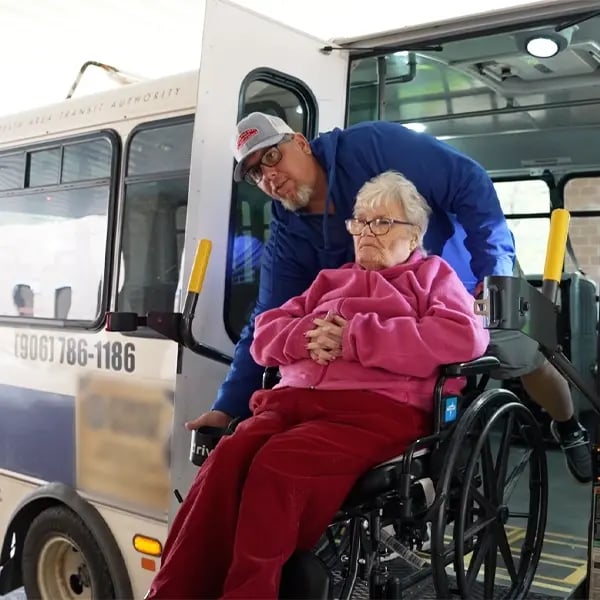
What Would the Millage Fund?
If authorized by Delta County voters, the millage would:
- Provide countywide coverage, including access to DATA services in the seven townships that currently have none.
- Expand service hours, including:
-
- Monday through Thursday, 6 a.m. to 6 p.m.
- Friday, 6 a.m. to 2 a.m.
- Saturday, 7 a.m. to 2 a.m.
- Replace the existing city and township millages with a single, countywide rate. This would open eligibility for additional state and federal transit funding, which requires a local match and will bring approximately $1 in outside funding for every $1 raised locally.
FAQs
How Does a Public Transit Millage Work?
A millage for public transit is a localized property tax approved by voters to fund local transportation systems like DATA. It acts as a dedicated revenue stream to bridge the gap between passenger fares and operating costs.
Is This a New Millage?
Yes. The proposal would authorize a new countywide millage of 0.689 mills. Currently, DATA is funded through a patchwork of local millages: 0.6 mills in Escanaba and Gladstone, and 0.5 mills in seven participating townships (Bay de Noc, Bark River, Brampton, Ensign, Ford River, Masonville and Rapid River). Seven other Delta County townships (Wells, Garden, Nahma, Maple Ridge, Baldwin, Cornell and Fairbanks) currently have no DATA service because no local transit millage funding is in place there. If the countywide millage is authorized, it would replace the existing city and township transit millages with a single shared rate that funds service for all of Delta County.
How Much Would the Millage Cost a Homeowner?
The cost of 0.689 mills for a home with a taxable value of $100,000 is $68.90 per year. The millage is applied to the home’s taxable value, which is 50 percent of the market value. A mill is $1 for every $1,000 of taxable value.
How Does Public Transportation Serve Delta County?
DATA has provided demand-response, door-to-door service to Delta County since 1989. DATA is a non-profit public transportation authority, audited annually, with executive leadership and staff shared with Schoolcraft County Transit Authority to keep administrative overhead low. In the 2025 fiscal year, DATA operated 265 service days and traveled 450,539 vehicle miles with a fleet of 18 vehicles and 29 full- and part-time employees.
More than half of DATA trips (54%) are working-age adults, often commuting to jobs at employers like the casino, Walmart, Elmer’s and Meijer. The service also reaches Delta County’s rising senior population, veterans, students, individuals with disabilities and residents without vehicles and provides emergency transportation for nursing homes, housing complexes and warming centers.
Riders and Delta County residents told DATA what they wanted through a series of rider surveys and listening sessions. They asked for weekend hours, early-morning rides and evening service. DATA used those answers to plan the new schedule being proposed with this millage.
What Has Changed Since the Last Countywide Millage Was Proposed?
The last countywide transit millage proposal in Delta County was on the ballot in 2002. Since then:
-
Delta County's senior population has grown to 27.5%, compared to 18% statewide, and is projected to reach 32% by 2040.
-
The State of Michigan's share of rural transit operating costs has dropped from roughly 60% to about 33% today, increasing the importance of local funding.
-
Five other Upper Peninsula counties (Alger, Gogebic, Marquette, Ontonagon and Schoolcraft) have authorized countywide transit millages.
How Would the New Millage Change what I Pay?
Right now, different parts of Delta County pay different amounts for DATA. Some areas pay nothing because they have no service at all. The new millage would set one single rate of 0.689 mills for everyone in the county. What that means for you depends on where you live.
Here is how it would change each year for a home with a taxable value of $100,000 (about half of what the home would sell for):
| Where you live | You pay now* | You would pay* | Change if Millage passed* |
|---|---|---|---|
| Escanaba and Gladstone | about $60* | about $68.90* | About $8.90 per year* |
| The seven townships with service now | about $50* | about $68.90* | About $18.90 per year* |
| Areas with no DATA service today | $0 | about $68.90* | About $68.90* |
*Based on a $200,000 home, with a $100,000 taxable value.
So most people who already have DATA would pay only a little more (about $9 to $19 more a year in the example above. Areas that pay nothing today would start paying the new rate, but they would also gain DATA service they do not have now. And no matter where you live, every local dollar helps unlock about $1 more in state and federal funding.
How Much Does It Cost to Ride DATA?
The price depends on two things: how far you are going, and whether you live in an area that helps pay for DATA through the millage.
If you live in a current millage-paying area
This includes the cities of Escanaba and Gladstone, and the townships of Bay de Noc, Bark River, Brampton, Ensign, Ford River, Masonville, and Rapid River.
| How far | Cost |
|---|---|
| Up to 5 miles | $4.00 |
| 5 to 10 miles | $6.00 |
| 10 to 20 miles | $8.00 |
| 20 to 40 miles | $10.00 |
| 40 to 60 miles | $12.00 |
If you live outside a current millage-paying area
You can only book a ride if DATA is already in your area that day.
| How far | Cost |
|---|---|
| Up to 5 miles | $12.00 |
| 5 to 10 miles | $18.00 |
| 10 to 20 miles | $24.00 |
| 20 to 40 miles | $30.00 |
| 40 to 60 miles | $36.00 |
Discounts
Half-price rides
- These riders pay half price:
- seniors (age 60 and up)
- students age 18 and under
- college students with proof of enrollment
- veterans with a photo ID or DD-214
- people with disabilities
For those with disabilities to access this discount, please fill out an ADA form signed by a healthcare worker. You can find the form on this website, at our office, or from any bus driver.
Kids
- Children age 5 and under ride free with a paying adult.
- For babies, we ask that you bring your own car seat.
Why Doesn't DATA Have Regular Bus Routes and Bus Stops?
DATA picks you up at your door and drops you off where you need to go. We do this because many of our riders cannot easily get to a bus stop. Some use a wheelchair. Some live far from a main road. If DATA used set routes with bus stops, we would still need to give door-to-door rides to those people. That would mean running two systems at the same time, which costs a lot more money.
Larger cities can run more than one system because they have many more people. For a county our size, one simple door-to-door service works better and provides more service for less cost.
What Happens If the Millage is Not Approved By Voters?
If the millage does not pass, DATA could lose most of its funding. Appoximately 90% of all our rides would go away. The current city and township millages cannot be extended long-term. DATA could only give rides to people with special contracts. The seven townships we serve now would lose DATA completely.
Why Can't DATA Just Use State and Federal Money?
State and federal money does not come for free. To get it, DATA first has to put up local money to match it. Without additional local funds, we cannot access those state and federal dollars. Here is the good part: for every $1 we raise locally, DATA can bring in about $1 more from the state and federal government. So, your local dollars do double the work.
What If My Township Votes Yes, But the Rest of the County Votes No?
The millage will either pass or fail based on how the whole county votes. A single township cannot join on its own or opt out on its own.
Isn't It Expensive To Insure All Your Vehicles?
DATA does not buy regular private insurance. Instead, we use state and federal contracts to team up with other transit systems and share the costs. This is called an insurance pool and brings down prices for all of us.
Why Are the Windows Tinted?
That is how our vehicles come from the manufacturer. DATA buys its vehicles through a state program, and does not choose things like window tint. It’s simply how the vehicles come to us when we buy them.
If This Passes, Will I Pay Two Transit Millages?
No. If the vote passes, the new countywide millage would replace the existing transit millages in Delta County. There would be one shared rate, across the entire county.
What's On the Ballot?
Shall the Delta Area Transit Authority, County of Delta, Michigan, be authorized to levy annually a new additional millage in an amount not to exceed .689 mill ($0.689 per each $1,000 of taxable value) against all taxable property within the Delta Area Transit Authority limits (the jurisdictional limits of Delta County) for a period of eight (8) years, 2026 through 2033, inclusive, for the purpose of providing funds for all public transportation authority purposes permitted by law, including but not limited to funding demand-response transportation and related services for senior citizens, individuals with disabilities, economically disadvantaged persons, veterans, and the general public; the expansion of service hours and days; and increased service availability and coverage throughout Delta County? The estimate of the revenue the Delta Area Transit Authority will collect if the millage is approved and levied by the Delta Area Transit Authority in the first year (2026) is approximately $1,100,000. By law, a portion of the revenue from the millage may be subject to capture by the Downtown Development Authorities of the City of Escanaba and the City of Gladstone.
The Ballot Says "A Portion of the Revenue From the Millage May Be Subject to Capture By the Downtown Development Authorities of the City of Escanaba and the City of Gladstone." What Does that Mean?
This language in the ballot refers to a small portion of the millage money that might be used to improve the downtown areas in Escanaba and Gladstone.
Here's how it works. Both cities have a Downtown Development Authority, or DDA. Their job is to improve their downtown areas by doing things such as fixing roads, parking lots or streetlights. To pay for that work, the DDA is allowed to keep a small percentage of the tax money from its downtown area.
There is no set percentage in state law. How much each DDA keeps depends on how much its downtown has grown in recent years. That is why the ballot says a portion "may" be captured by the DDAs instead of naming a number.
Almost all of the money from the millage would go toward paying for DATA rides across Delta County. The state requires this sentence on the ballot, so voters know about it ahead of time.
How is DATA Funded?
DATA is a non-profit public transportation authority funded through a combination of local millage revenue, state Local Bus Operating (LBO) funds, federal transit dollars and rider fares.
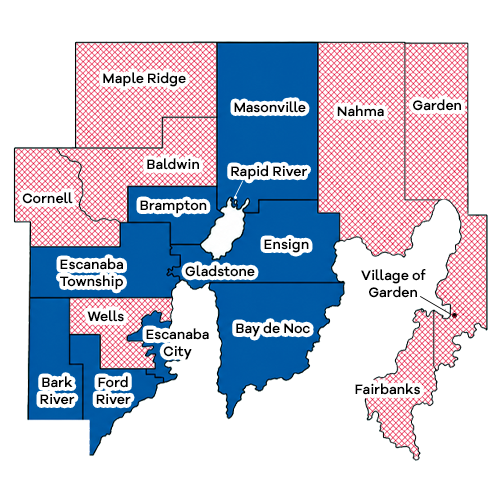
Current DATA Services
- Service to seven townships and two cities in Delta County, funded by a patchwork of local millages
- Service hours:
- Monday through Friday, 7 a.m. to 6 p.m.
- Closed Saturday and Sunday
- Limited state and federal funding to public transportation in Delta County
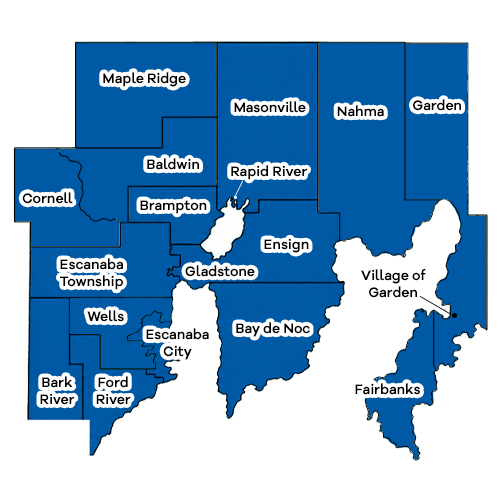
DATA Services if Voters Approve the Millage
- Service to all of Delta County, funded by a single countywide millage of 0.689 mills
- Expanded service hours:
- Monday through Thursday, 6 a.m. to 6 p.m.
- Friday, 6 a.m. to 2 a.m.
- Saturday, 7 a.m. to 2 a.m.
- Eligibility for additional state and federal transit funding of approximately $1 in outside funding for every $1 raised locally